The misunderstanding at the heart of hybrid
Many owners hear hybrid and picture a shift: fewer people in the building, more people on a screen, lower costs and wider reach. It is an attractive story, and some of it is true. But it treats training as a content problem, as if people stay fit when they have enough videos to choose from. Members rarely fail because they ran out of content.
They fail because routine breaks. A busy week, an injury, a holiday, a dip in motivation. What carries people through those moments is usually not information but connection: a coach who notices, a group that expects them, a place that feels like theirs. A hybrid model that forgets this builds a library nobody opens.
Why fitness is behavioural before it is digital
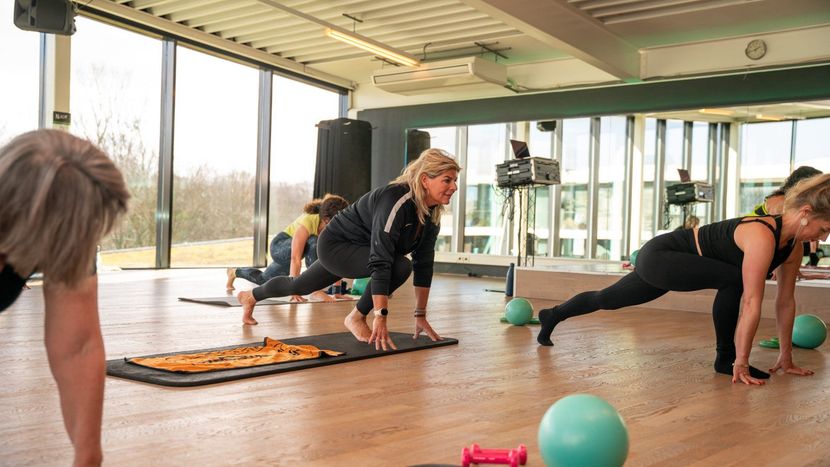
Training changes behaviour, and behaviour responds to people, places and habits. Walking into a club on a regular day, seeing familiar faces and following a plan with a coach attached creates accountability that a standalone app struggles to match. Take away the place and you remove most of the reasons to show up.
That does not make online worthless. It makes it a supporting layer. The question to ask of every digital service is whether it strengthens the member's relationship with the club or replaces it. If a member only ever uses the online side, the club has become a content subscription, and content subscriptions are easy to cancel. Our view on hybrid fitness concepts starts from this question.
Consider the coach as well. In a club-centred model the coach is the person members trust, and online sessions should carry that same face and voice. When a member recognises the instructor on screen from last Tuesday in the studio, the two worlds connect. When the content comes from a stranger, the link breaks and the online side starts to compete with the club for attention.
What a good hybrid model looks like
In a healthy model, the club sets the programme, the culture and the relationships. Online services extend that into the gaps: a session at home when a member cannot attend, a recorded class from their own coach, a plan that continues during travel. The member experiences one club, available in more than one form.
This is the role of a member app and On Demand offer. It should carry the club's voice, its coaches and its classes, so that a workout at home still feels like part of the same community. Dialanta's On Demand and member app are built for that purpose, extending the club rather than standing apart from it.
Why members really use online training
Ask members why they open an online session and the answers are practical. They could not get to the club. They wanted something short. They were away, or unwell, or the schedule did not fit. Very few say they wanted distance from the gym. They wanted continuity.
That is useful for design. If continuity is the goal, online content should be easy to find, short enough for a crowded day and clearly linked to the member's own plan. It should also lead back to the club: a prompt to book the next class, a message from the coach, a reminder that the group is expecting them. The digital side exists to protect the habit, so that missed visits do not become lost members.
Hybrid without structure drifts
Launching a platform is the easy part. Without structure, content goes unused, engagement fades quietly and retention slips without an obvious cause. Nobody owns the question of who should be using what, when, and what happens if they stop.
Structure means deciding in advance how a new member is introduced to both sides, which behaviours signal healthy use, and what the team does when someone drifts. It also means pricing and membership design that make sense together, which is the subject of our pricing and membership structure work. Without that, online access gets bundled in by default and nobody can say what it contributes.
Use the signals to protect retention
A hybrid model produces more data than a gym alone: club visits, online sessions, class bookings, message replies. Together they show who is engaged and who is fading. A member who stops visiting but still watches sessions is in a different position from one who has gone silent on both. The first needs encouragement, the second needs a conversation.
Acting on those signals is the core of retention. When the system flags a drop and a coach reaches out personally, the online layer earns its place. The KPIs worth tracking are churn, member lifetime value and the share of members using both sides. Dialanta's retention radar puts those patterns in front of the team so they can act early.
Questions to ask if you are planning a hybrid offer
Before building anything, write down who the offer is for. A member who trains three times in the club and wants a home option while travelling needs something different from a person who lives too far to attend at all. Each group suggests a different product, price and message, and mixing them produces a vague offer that suits nobody.
Next, decide how the offer is introduced. Does a new member meet the online side in the first conversation, or only later? Who explains it? What does the coach say when a member misses a visit? These small decisions shape whether people see online as part of the club or as a separate subscription. A clear club positioning helps the team describe it consistently, and your brand and visual identity should carry across both the building and the screen.
Finally, agree how you will judge it. Look at churn among members who use both sides compared with those who do not, at visit frequency, and at how many members rebook after a missed week of training. Report these ongoing, in one system, and adjust. A hybrid model should earn its keep through retention and member value, not through novelty. If the figures do not support it, the structure needs another look.
Keep the commercial logic honest
Hybrid can add real value, but it should be justified in plain commercial terms. Does it reduce cancellations, support higher-value memberships, or reach people who would not otherwise join? Each of these is a legitimate reason, and each can be tracked. If none applies, the platform is a cost with a modern label.
We approach this as part of one growth strategy: positioning, marketing, sales and retention designed together around the club. Online supports commitment, it does not replace it. If you are planning a hybrid offer, or already running one that is not delivering, we can look at the structure with you and decide what the club needs next.
A closing thought on culture. When the coaches, the front desk and the owner all describe the club in the same way, the online and in-person experiences feel like one thing. That consistency is hard to buy and easy to lose, so protect it as you add services around the building.